


Everybody in healthcare knows HIPAA. We understand the key principles and provisions, we complete our yearly training and, if we’re lucky, we make time every now and then to keep up to date with any changes to the law. It’s easy to think that this level of investment is enough, but the law is expansive, and there are many ways unintentional HIPAA violations can occur.
As the healthcare industry at large continues to embrace digital solutions that make health data more accessible, compliance with HIPAA is more crucial than ever before. Even well-meaning healthcare providers can unintentionally violate these rules, so understanding common pitfalls is essential.
In this blog post, we will investigate common examples of unintentional HIPAA violations together and offer strategies to help you identify, mitigate and prevent these mistakes.
Understanding HIPAA Violations
HIPAA violations fall into two categories of penalties: civil and criminal. The difference between a HIPAA violation that results in civil penalties and one that results in criminal penalties lies in the intent behind it.
A HIPAA violation resulting in a civil penalty is caused by unintentional infringement or negligence, like mistakenly disclosing protected health information (PHI) or failing to update security measures. Penalties for civil violations are largely left to the discretion of the Secretary of the U.S. Department of Health and Human Services, which takes into account the nature and extent of the violation as well as the nature and extent of the resulting harm.
On the flip side, HIPAA violations result in criminal penalties when they are shown to be committed knowingly, with intent or under false pretenses. For the purposes of this blog, we will only be looking into civil (unintentional) HIPAA violations – criminal HIPAA violations are a separate topic altogether. and we assume all of you would never willfully or deliberately misuse PHI!
5 Common Examples of Unintentional HIPAA Violations
At the end of the day, everyone makes mistakes. Rarely, if ever, do such mistakes result in penalties for HIPAA violations, but when left unchecked, the potential exists for ongoing mistakes to evolve into a bigger issue.
Here are some common ways you could be unintentionally violating HIPAA throughout the average workday without realizing it:
| Scenario | Prevention Tip |
| Disclosing PHI to unauthorized parties Example: A caller claims to be the spouse of a patient to obtain their health information. They correctly identify the patient and date of birth, and a staff member answers their questions. However, the caller was not named on any consent forms, so the staff member inadvertently disclosed PHI to an unauthorized party. | Always verify the identity of anyone requesting PHI by asking security questions and even then, consult the patient’s documented consent forms to confirm authorized recipients. |
| Leaving sensitive information visible and unattended Example: A nurse leaves a computer screen open with patient records on screen in a shared space, and other patients are able to view the information. | Implement automatic screen locks and ensure devices are secured when unattended. |
| Sending PHI through regular email Example: Your secure, encrypted email server is down. To meet a deadline, an HIM employee emails a patient their requested information through their personal gmail account as opposed to using the secure channel. | Train staff to use secure communication platforms and highlight the risks of using unencrypted channels. Create contingency plans and procedures for when unplanned events occur. |
| Using personal devices to access PHI Example: A physician uses their personal smartphone to check patient information while on call. Later, their phone is stolen, and the health data stored on it becomes vulnerable. | Enforce a strict “no personal devices” policy when accessing PHI and use encrypted devices where applicable. |
| Improperly disposing medical records Example: While cleaning the office, an office manager tosses CDs containing patient data into the trash without realizing they had PHI on them. | Exercise extreme caution when handling any protected materials. Implement clear protocols for securely disposing of physical and electronic records. |
The Domino Effect of Unintended Errors
If the examples above illustrate anything, it’s that anyone can unintentionally violate HIPAA. Whether you’re in a rush, forget a legal footnote or simply have a slip-up, nobody is perfect. But the fact is this – small mistakes can add up, and seemingly minor errors over time can lead to major consequences, like data breaches or stolen information.
It only takes a quick scroll through Google to see the impact that major HIPAA violations can cause. A misdirected email, an unsecured document or an overlooked access log can be enough to open the door for unauthorized access to patient data. HIPAA violations can quickly add up, potentially leading to damage to your organization’s reputation, burden on your organization’s resources and an erosion of the trust patients have in you. And once that happens, it’s an uphill battle to rebuild your reputation, correct the issue and instill confidence back into your patients.
Taking proactive steps to address common pitfalls and training staff on HIPAA best practices can go a long way in preventing these avoidable risks.
5 Preventive Measures to Avoid Unintentional HIPAA Violations
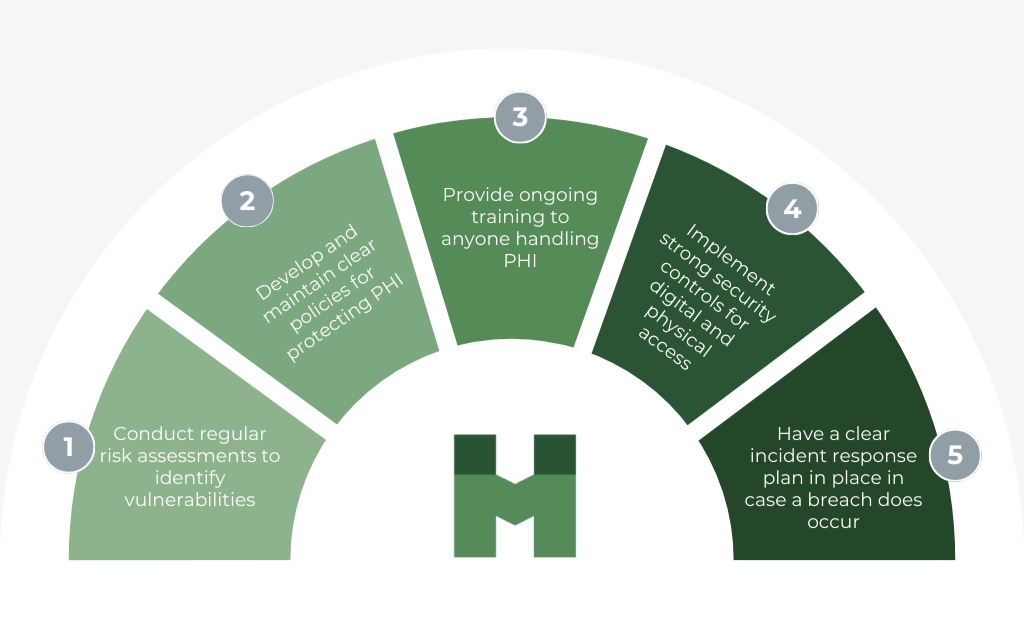
Now that we’ve covered some common pitfalls, let’s focus on prevention. After all, prevention is the best medicine!
- Conduct regular risk assessments to identify potential vulnerabilities
- Develop and maintain clear policies on protecting PHI
- Provide ongoing training and education to anyone handling PHI
- Implement strong data security controls (think both digital and physical access)
- Have a clear incident response plan in place in case a breach does occur
The Bottom Line
While we all know HIPAA and work within its confines every day, that doesn’t mean understanding the complexities of the law is easy—in fact, it can be all too easy to make simple mistakes despite having the best intentions. Policies, protocols and training to prevent unintentional violations are the absolute best practice when it comes to HIPAA or any other regulatory compliance requirements.
Be sure to subscribe to our blog for ongoing tips and tricks to help your organization navigate the intricacies of HIPAA compliance!